Alcohol Information
We all know that drinking too much can be harmful to our health. It is recommended that if adults (people who are 21 years or older) choose to drink, drinking less alcohol is better than drinking more.
What is a Standard Drink?
This is what one drink looks like
According to the Dietary Guidelines for Americans, moderate drinking is up to one drink per day for women up to two drinks per day for men. A standard drink contains 14 grams of pure alcohol.
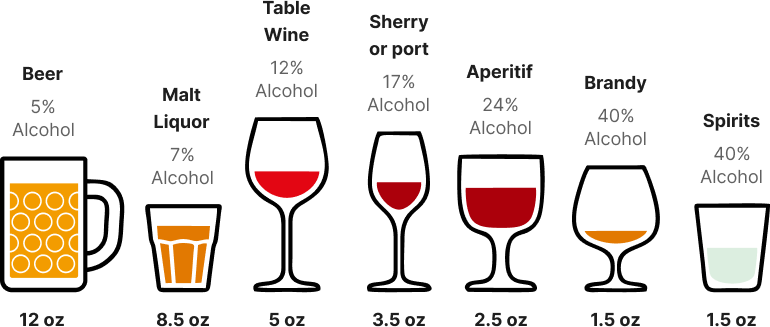
Measures are approximate, since different brands and beverages may vary in their actual alcohol content.
- 12 ounces of beer (5% alcohol content)
- 8 ounces of malt liquor (7% alcohol content)
- 5 ounces of wine (12% alcohol content)
- 1.5 ounces or a “shot” of 80-proof (40% alcohol content) distilled spirits or liquor (e.g., gin, vodka, rum, tequila, whiskey, brandy)
What is Excessive Drinking?
Excessive drinking refers to consuming alcohol in a manner that poses a risk to health, safety, and well-being. It can include drinking too much in one sitting or engaging in patterns of alcohol consumption that can lead to long-term negative effects on physical and mental health.
Binge drinking: Consuming an excessive amount of alcohol in a short period. For men, this is typically five or more drinks in about two hours; for women, four or more.
Heavy drinking: Regularly exceeding the safe drinking guidelines, which for men is more than 14 drinks per week and for women, more than 7 drinks per week.
Alcohol use disorder (AUD): A chronic disease characterized by the inability to control alcohol consumption despite negative consequences.
What are the Signs of Excessive Drinking?
There are many signs that can point towards excessive drinking tendencies. These include but are not limited to:
Drinking more than intended
Frequently finding that you’re drinking more or for longer than you had planned.
Inability to cut back
Despite wanting to reduce your drinking, you find it difficult or impossible to do so.
Spending a lot of time drinking
You might spend a significant amount of time obtaining, drinking, or recovering from alcohol.
Cravings
Strong urges or cravings to drink alcohol, which can become overwhelming.
Interference with daily life
Alcohol starts to affect your work, school, or social responsibilities, leading to problems like missed appointments, poor performance, or strained relationships.
Tolerance
Needing more alcohol to achieve the same effects, indicating that your body has become accustomed to the substance.
Withdrawal symptoms
Experiencing symptoms like shakiness, sweating, nausea, irritability, or anxiety when not drinking, indicating physical dependence.
Neglecting other activities
You may give up or reduce participation in hobbies, activities, or social events that you used to enjoy in favor of drinking.
Drinking in dangerous situations
Engaging in risky behaviors, such as driving under the influence or drinking in unsafe settings.
Continued drinking despite health issues
Persisting in drinking even when you know it’s causing or worsening health problems, such as liver damage, anxiety, depression, or memory problems.
If you recognize multiple signs in yourself or someone else, it may be an indication that drinking has become a problem.
Seeking help from a healthcare professional or a support group can be an important step toward managing and addressing excessive drinking.
LEARN MORE AT SAHMSA


